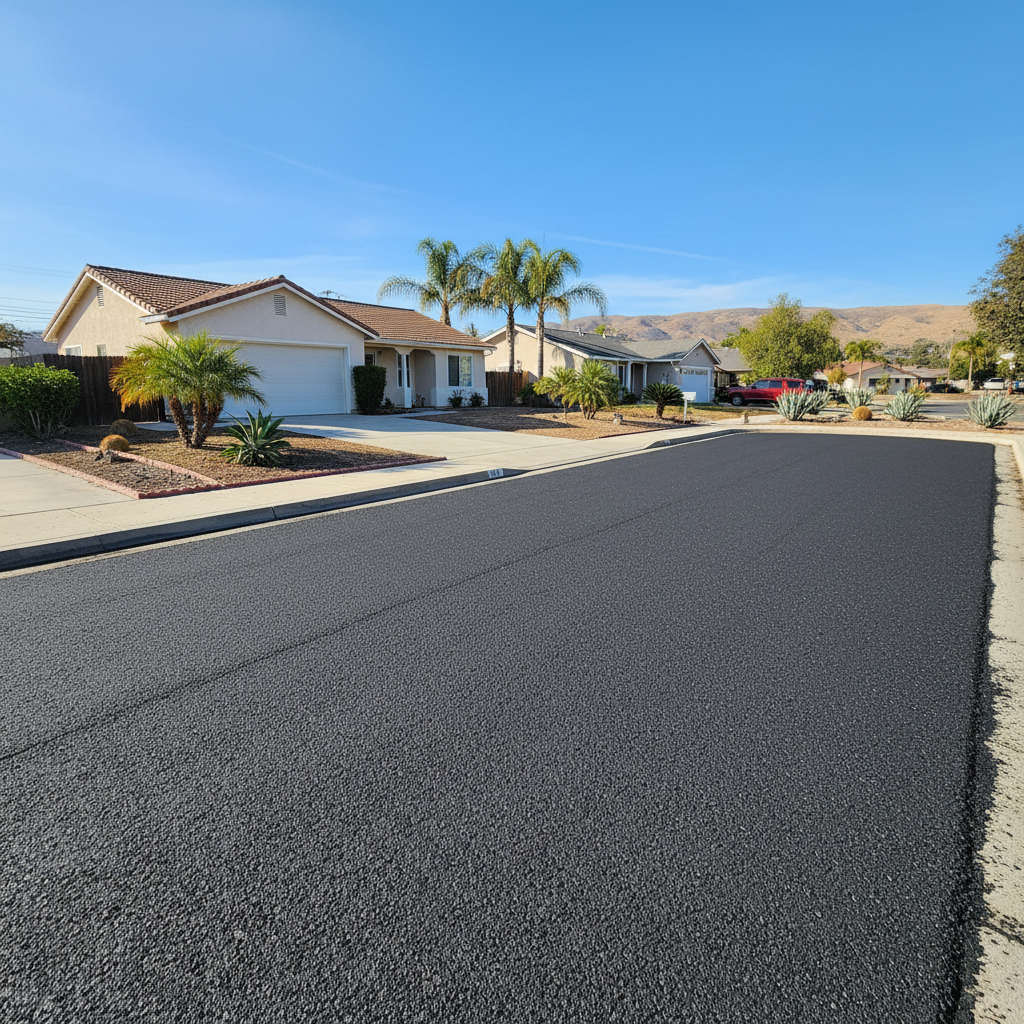
Alright, let's talk asphalt milling. You've got a parking lot or a driveway that's seen better days, maybe it's got alligator cracking, potholes, or just looks tired. You know you need to fix it, but a full tear-out and replace job can be a huge headache and a big hit to the wallet. That's where milling comes in. It's a smart way to get a fresh surface without starting from scratch, and it's a service we do a lot of here at National City Precision Asphalt.
But what's it actually going to cost you? That's the million-dollar question, and I'm not going to give you some vague 'it depends' answer. We'll get into some real numbers.
What Even IS Asphalt Milling?
Before we dive into dollars, let's make sure we're on the same page. Milling is basically like a giant planer for your asphalt. A specialized machine, called a cold planer or milling machine, shaves off the top layer of your existing asphalt pavement to a specific depth. This creates a uniform, textured surface that's ready for a new layer of asphalt. It's not just for looks; it helps with drainage, levels out bumps, and gives the new asphalt a strong base to bond to.
What Drives the Cost Up or Down?
There are a few big factors that'll swing the price tag on a milling job. You need to know these so you can understand your quote.
- Project Size: This is probably the biggest one. Larger areas generally get a lower price per square foot because of economies of scale. It costs a certain amount to mobilize the equipment and crew, whether it's for 5,000 sq ft or 50,000 sq ft.
- Milling Depth: Are we taking off just an inch or two, or are we going down four or five inches? Deeper cuts mean more time, more wear on the equipment, and more material to haul away. Most standard jobs for a parking lot overlay are 1.5 to 2 inches.
- Asphalt Thickness/Hardness: Older asphalt can be harder to mill than newer stuff. Sometimes, especially in older industrial areas of National City like around the Port of San Diego, you run into really thick, compacted asphalt that takes more effort and time.
- Accessibility: Can the big milling machine and haul trucks easily get in and out? Tight spaces, lots of obstacles (like light poles, curbs, or landscaping), or areas with heavy traffic flow will slow down the crew and increase labor costs.
- Hauling & Disposal: Once we mill it up, that old asphalt has to go somewhere. It's called RAP (Recycled Asphalt Pavement), and it's valuable, but there's still a cost for trucking it off-site and processing it. Most quotes include this, but always double-check.
- Prep Work & Cleanup: Are there a lot of oil stains that need pre-treatment? Does the site need extensive sweeping after milling? This can add to the labor.
Typical Cost Ranges in National City, CA
Okay, let's get to the numbers. For most commercial or larger residential milling projects in National City, you're usually looking at a range of $0.75 to $2.50 per square foot. That's a pretty big range, I know, but it really depends on those factors I just mentioned.
- Small to Medium Projects (5,000 - 15,000 sq ft): You're likely to be on the higher end of that range, maybe $1.50 to $2.50 per sq ft. This accounts for the fixed costs spread over a smaller area.
- Medium to Large Projects (15,000 - 50,000 sq ft): This is where you start seeing better rates, typically from $1.00 to $1.75 per sq ft.
- Very Large Projects (50,000+ sq ft): For massive parking lots or roadways, you might even see prices dip down to $0.75 to $1.25 per sq ft, especially if it's a straightforward, deep mill.
These numbers usually include the milling itself, hauling away the RAP, and basic site cleanup. They generally don't include the cost of the new asphalt overlay, which is a separate line item.
What Should Be in Your Quote?
When you get a quote from National City Precision Asphalt, or any other reputable contractor, make sure it clearly spells out a few things:
- Total Square Footage: This should be accurate and agreed upon.
- Milling Depth: Specify if it's 1.5 inches, 2 inches, etc.
- Scope of Work: What areas are being milled? Are there any specific sections to avoid?
- Inclusions: Does it include hauling and disposal of RAP? What about sweeping and site prep?
- Timeline: When do they expect to start and finish?
- Payment Terms: Standard stuff, but important.
- Insurance & Licensing: Always make sure they're properly licensed and insured. Don't skip this, especially in California.
How to Avoid Overpaying
Nobody wants to get ripped off, right? Here's my advice:
- Get Multiple Bids: Don't just go with the first guy. Get at least three detailed quotes. This helps you compare apples to apples and understand the market rate.
- Be Specific About Your Needs: The more information you give the contractor upfront, the more accurate their bid will be. Know your square footage, what depth you're aiming for, and any access challenges.
- Ask Questions: If something in the quote isn't clear, ask. A good contractor will be happy to explain.
- Check References: Ask for other projects they've done in the National City area. See their work firsthand if possible.
- Don't Always Go for the Absolute Cheapest: The lowest bid isn't always the best value. Sometimes, a slightly higher price means better equipment, more experienced crew, or better insurance coverage. You don't want a cheap job that falls apart in a year or two, especially with our hot National City summers and the heavy traffic on places like Highland Ave.
Milling is a solid investment for extending the life of your pavement. Do your homework, get clear quotes, and you'll get a great result without breaking the bank.