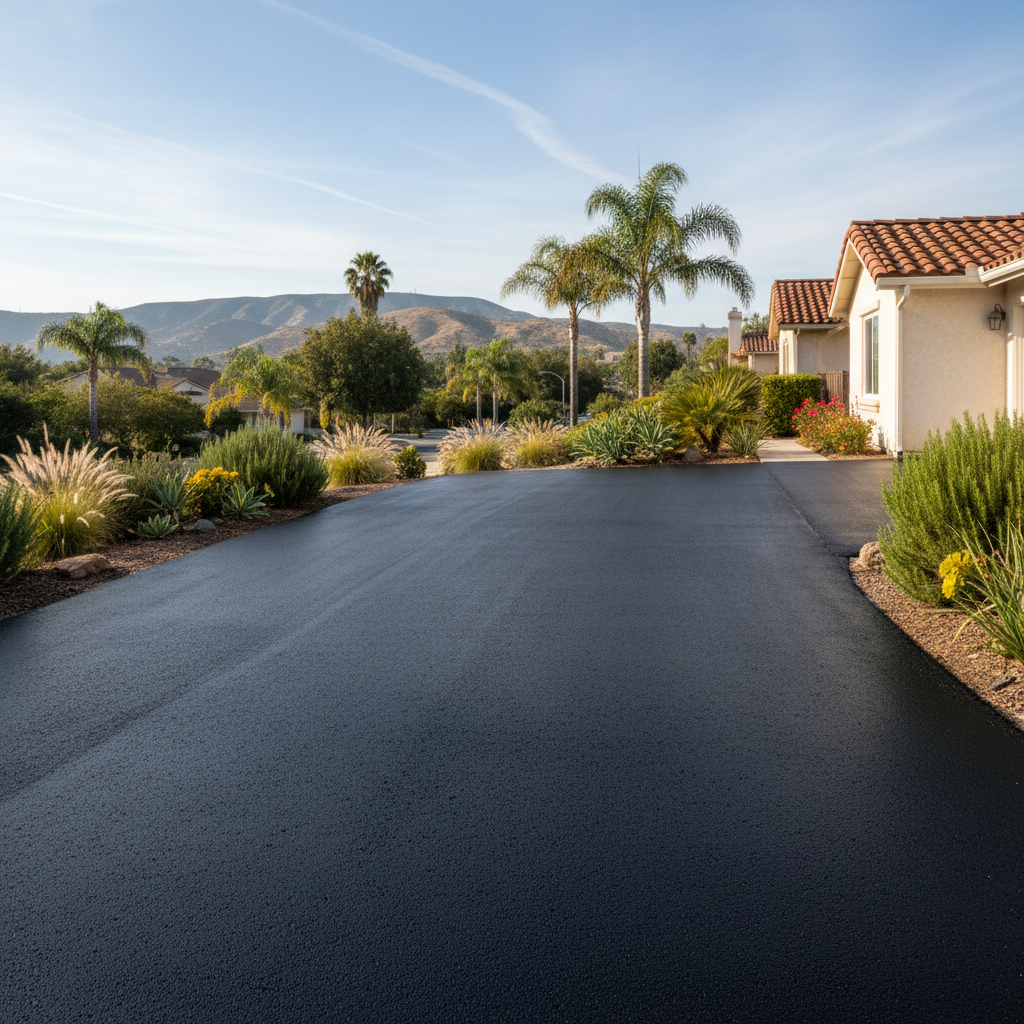
Alright, let's talk sealcoating. You've got an asphalt driveway, and you want it to last, right? Good. Because a lot of folks around National City think sealcoating is just about making things look pretty. And yeah, it does make your driveway look sharp, but that's just a bonus. The real reason you sealcoat is to protect your investment from the sun, the rain, and everything else our Southern California weather throws at it.
Why Sealcoating Isn't Just for Looks
Think of sealcoating like sunscreen for your driveway, or maybe a good coat of paint on your house. It's a protective layer. Asphalt, at its core, is made up of aggregates (rocks, sand) held together by a binder, which is petroleum-based. Over time, especially with our intense sun here, that binder starts to oxidize. It dries out, gets brittle, and then you see those tiny cracks forming. Those tiny cracks turn into bigger cracks, and before you know it, you're looking at potholes and a much more expensive repair job.
A good sealcoat puts a fresh, flexible barrier over your asphalt. It blocks UV rays, keeps water from seeping into those tiny cracks, and even resists oil and gas spills. It basically extends the life of your driveway by years, saving you a ton of money in the long run. We've seen it time and again at National City Precision Asphalt – folks who keep up with sealcoating rarely need major repairs.
The Best Time to Sealcoat in National City
This is where our local climate really comes into play. You can't just slap sealcoat down whenever you feel like it. Temperature and moisture are critical. The general rule of thumb is that the air temperature needs to be at least 50 degrees Fahrenheit and rising, and stay above that for at least 24 hours after application. The ground temperature matters too – it needs to be warm enough for the sealcoat to cure properly.
For us in National City, that usually means late spring, summer, and early fall are your sweet spots. Think May through October. We get those consistent warm, dry days that are perfect for sealcoating. You want a stretch of at least two to three days without rain in the forecast. Sealcoat needs time to dry and cure, and rain or even heavy morning dew too soon after application can ruin the job, washing it away or causing it to cure unevenly. Nobody wants that.
I've seen people try to get it done in December or January because they got a good deal, but if it's too cold or damp, that sealcoat won't bond right. It'll peel, flake, and you'll have wasted your money. It's better to wait for the right conditions than rush it.
What Weather Conditions Affect the Work?
Beyond just temperature and rain, there are a few other things we keep an eye on:
- Humidity: High humidity can slow down drying times. While it's usually not a huge issue here in National City compared to, say, Florida, it's something to consider on particularly muggy days.
- Wind: A little breeze is fine, helps with drying. But strong winds can be a problem. They can blow dust and debris onto the wet sealcoat, and they can also make it tough to apply evenly, especially if you're spraying.
- Sun Exposure: Direct sunlight is great for curing, but extreme heat can be too much. If the asphalt itself is scorching hot, it can cause the sealcoat to dry too fast, leading to cracking or poor adhesion. We usually avoid applying in the absolute peak heat of a 90+ degree afternoon, especially on unshaded driveways in areas like Paradise Hills, where the sun beats down all day.
A good contractor will always check the forecast and the actual conditions on site before starting. If it doesn't look right, we'll reschedule. It's about doing the job once and doing it right.
Protecting Your Investment Year-Round
Once your driveway is sealcoated, you're not entirely off the hook. Here's how to keep it looking good and performing well:
- Give it Time: After sealcoating, you'll typically need to stay off it for 24-48 hours, sometimes longer for full curing. We'll tell you exactly how long. Don't rush it. Turning your car's wheels sharply on a fresh sealcoat can leave scuff marks.
- Clean Spills Promptly: Oil, gas, and other automotive fluids can break down asphalt and sealcoat. Clean them up as soon as you can.
- Mind Your Edges: The edges of your driveway are often the most vulnerable. Make sure they're not getting undercut by water or overgrown by grass.
- Regular Cleaning: A simple sweep or hose-down to remove dirt, leaves, and debris helps prevent organic matter from breaking down the surface.
- Re-sealcoat Every 2-3 Years: This is the big one. Don't wait until your driveway is faded and cracked again. A regular maintenance schedule is key. For most residential driveways in National City, every two to three years is a good rhythm. If you have heavy traffic or a lot of sun exposure, you might lean towards the two-year mark.
Look, your driveway is a big part of your home's curb appeal and value. Taking care of it with proper sealcoating, done at the right time, isn't just a chore; it's smart homeownership. If you're wondering if your driveway is ready for a fresh coat, give us a call at National City Precision Asphalt. We're happy to take a look and give you an honest opinion.