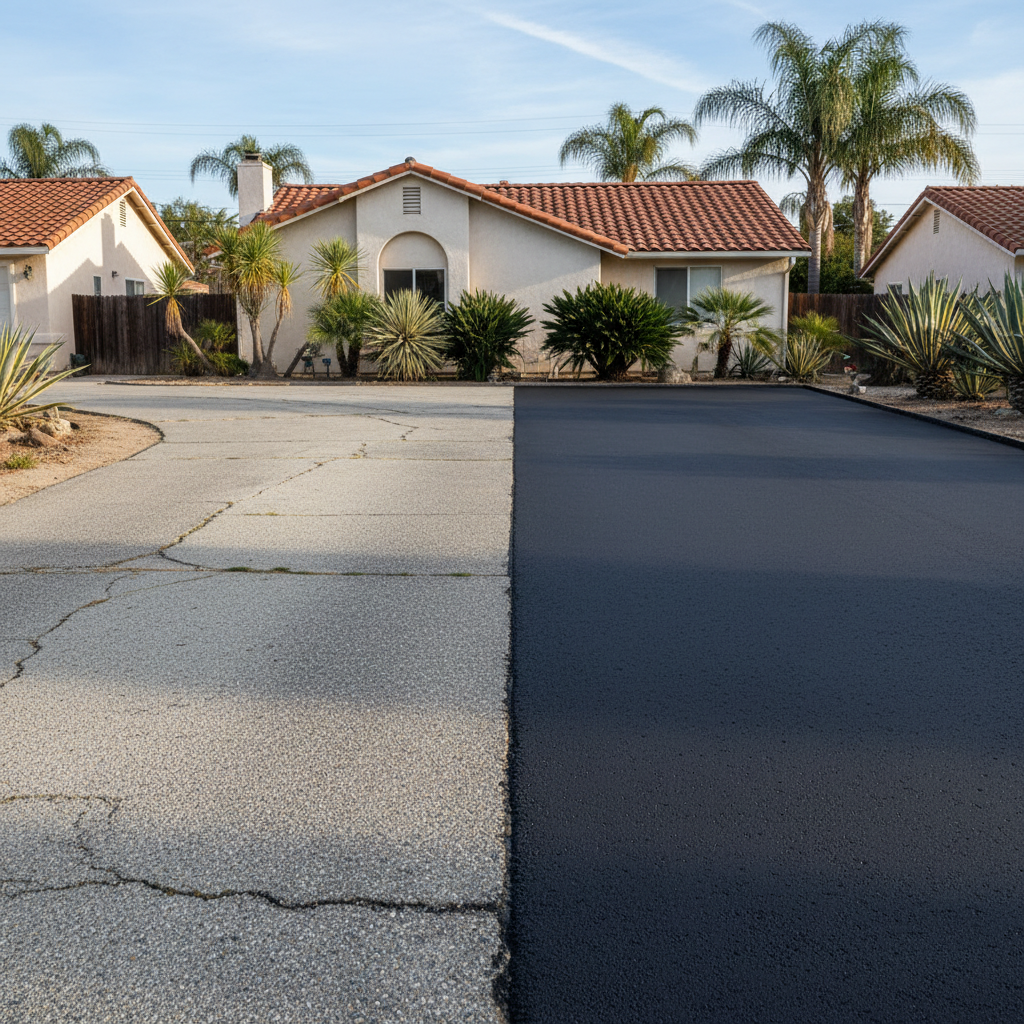
Alright, let's talk driveways. You're probably looking at your asphalt, maybe noticing some cracks, or perhaps it just looks a bit tired. You're wondering what the best move is, right? For homeowners right here in National City, you generally have two main choices when you want a fresh asphalt surface: a brand new installation or an asphalt overlay. People ask me about this all the time, so let's just break it down.
What's an Asphalt Overlay?
An overlay, which some folks call resurfacing, basically means we're putting a new layer of asphalt right over your existing one. Think of it like giving your driveway a fresh coat of paint. We'll start by cleaning the old surface, then fix any big cracks or potholes. After that, we lay down a new, fairly thin layer—usually about 1.5 to 2 inches—of hot mix asphalt directly on top. This is a fantastic option if your current driveway is mostly solid underneath but just needs a good facelift.
What's a Full New Asphalt Installation?
This is the whole enchilada. We're talking about completely ripping out your old driveway – and I mean everything, right down to the bare earth. Then, we get the subgrade ready, put down a fresh aggregate base layer, and finally, install a brand new, full-depth asphalt pavement. This is definitely the way to go if your existing driveway is totally shot, has serious structural problems, or if you're building a new driveway where there wasn't one before.
Cost: How Your Wallet Fits In
No surprises here: an overlay will almost always cost you less upfront than a full new installation. You're using less material, and there's way less demolition and digging involved. With a full installation, you're paying for all that removal, hauling away debris, and then building it up from scratch. It's a much bigger job, so it costs more. Pretty simple, really.
Durability & Lifespan
This is where things get a little "it depends." A properly done asphalt overlay can last a good 10 to 15 years, especially if the asphalt underneath was in decent shape to begin with. The new layer protects the old one and gives you a fresh surface. But, if the problems run deep – like major subgrade issues or widespread alligator cracking – an overlay is really just a temporary fix. Those underlying problems will eventually show through the new layer, sometimes pretty quickly, which is a shame.
A full new installation, on the other hand, gives you the longest lifespan. We're building it right from the ground up, making sure you have a super solid base. You're looking at 20 to 30 years, maybe even more, with good maintenance. It's an investment that truly pays off over the long haul because we're addressing every single layer of the pavement structure.
Maintenance Needs
Both options benefit from regular maintenance, things like sealcoating every few years and quickly fixing any small cracks that pop up. With an overlay, you'll really want to keep an eye out for reflective cracking – that's when old cracks from the original pavement start to show through the new layer. It's a common issue, and catching them early is crucial.
For a new installation, your maintenance starts with a clean slate. You're mostly just protecting that top layer with sealcoat and fixing minor surface cracks as they appear. It's generally less reactive maintenance because you don't have old problems hiding underneath.
Appearance
Both options, when done correctly, will give you a beautiful, smooth, dark black asphalt surface. An overlay is a fantastic way to refresh a dull, faded, or lightly cracked driveway and make your whole property look sharper. A new installation gives you that pristine, never-been-touched look, and you can even adjust the grade or slope if you need to, which you can't really do with an overlay.
So, Which One's Right for Your National City Home?
Here's my honest take. If your driveway has some surface cracks, maybe a few minor potholes, but it's generally level and doesn't have big dips or widespread structural failure, an overlay is a fantastic, cost-effective solution. It'll make your home look great and give you many years of service. We see a lot of older homes in areas like Old Town National City where the original driveways are still structurally sound but just need a facelift, and an overlay is perfect for that.
But if your driveway is crumbling, has large sections of alligator cracking, significant potholes, drainage issues, or if you notice your car dips in certain spots because the base is failing, then please, don't waste your money on an overlay. You'll just be throwing good money after bad. In that case, a full new installation is the only way to truly fix the problem and give you a durable, long-lasting driveway. It's more expensive upfront, sure, but it's the right solution for pavement that's truly failing.
Ultimately, it really comes down to the condition of your existing asphalt. We always recommend getting a professional assessment. We'll come out, take a look, and give you an honest opinion on what we think is the best approach for your specific situation and budget. At National City Precision Asphalt, we're not just trying to sell you the most expensive option; we want you to have a driveway that lasts and that you're genuinely happy with.