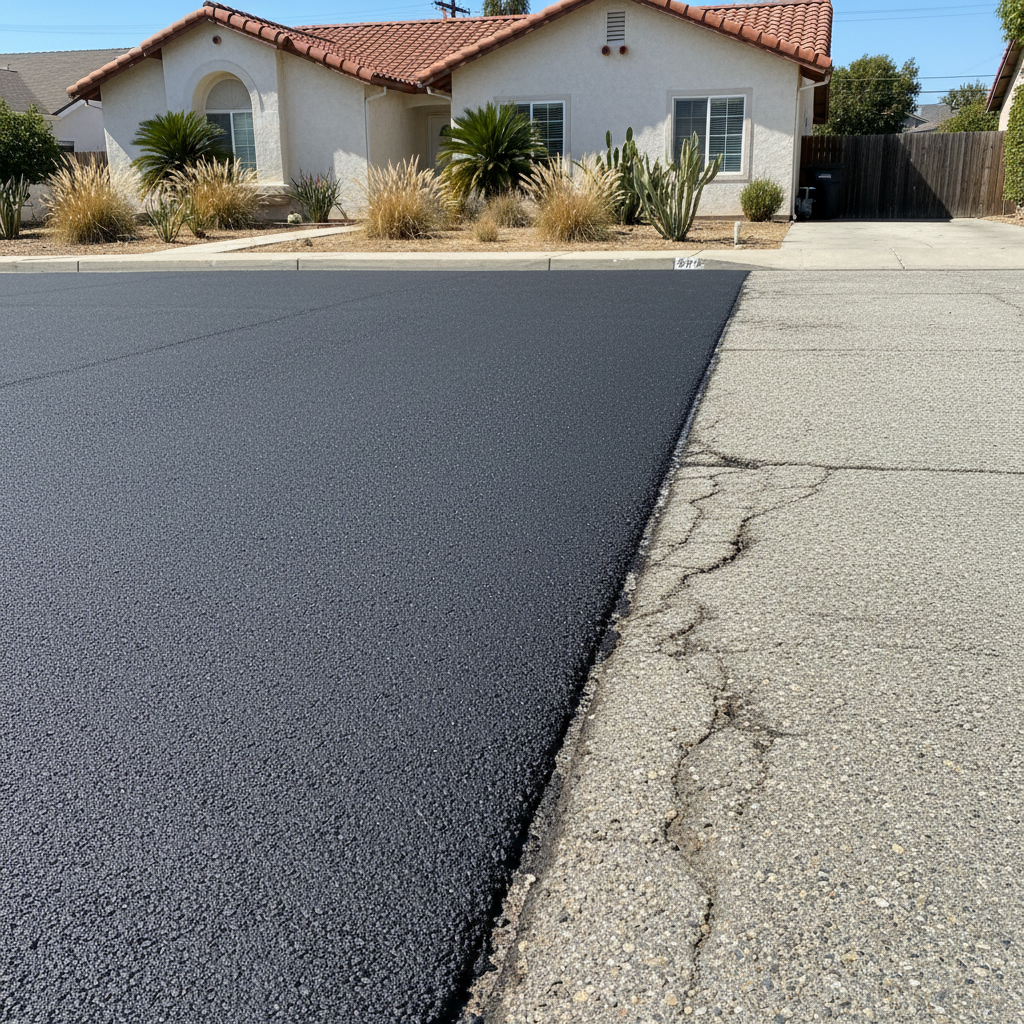
Your driveway's seen better days, huh? Maybe you've got a spiderweb of cracks, or one of those nasty potholes that's just begging to eat your tire. When that happens, you're usually looking at two main ways to fix it: crack filling or patching. Now, they sound pretty similar, and sometimes people even use the terms interchangeably, but they're actually for different problems and have different lifespans. Let's talk about what each one means for your National City home.
Crack Filling: Your First Line of Defense
Think of crack filling like getting a cut on your skin. You clean it, put on some antiseptic, maybe a bandage. It's really about preventing bigger problems down the road. We're talking about those hairline cracks, alligator cracking that hasn't started crumbling yet, or linear cracks that are less than, say, three-quarters of an inch wide. If you catch these early, crack filling is absolutely your best friend.
Here's how it generally works: We clean out the crack really well – get rid of all the dirt, debris, and loose bits. Sometimes we even use a heat lance to dry it out and burn off any weeds. Then, we apply a hot-applied, rubberized asphalt sealant directly into the crack. This stuff is flexible, which is key, so it moves with your asphalt as it expands and contracts with our typical National City temperature swings, especially those cooler nights after a hot day.
- Cost: This is usually the most budget-friendly option, hands down. It's preventative maintenance, so it costs a lot less than letting those cracks turn into full-blown potholes.
- Durability: If done right and on the right kind of crack, it can last several years. It won't last forever, of course, but it significantly extends the life of your pavement by keeping water out. Water is asphalt's worst enemy, especially with our occasional heavy rains that can saturate the ground here.
- Maintenance: Very low. Once it's done, you just keep an eye on it. You might need to re-apply every few years as part of your overall pavement maintenance plan.
- Appearance: It's not invisible. You'll definitely see the black lines where the cracks were filled. It's functional, not necessarily aesthetic perfection, but it looks a whole lot better than open cracks.
Asphalt Patching: When Things Get Serious
Alright, so crack filling is for cuts. Patching? That's for when you've got a gaping wound, or a broken bone. We're talking about potholes, areas where the asphalt has completely deteriorated and crumbled away, or significant depressions where water collects. If you've got a pothole big enough to trip over in your driveway near Paradise Hills, you need a patch, not just a fill. Believe me.
There are a few ways to patch, but the most common and effective for homeowners is what we call a "cut and patch" or "remove and replace." We'll cut out the damaged section of asphalt in a neat, rectangular shape. Then, we dig out the old, failed material, making sure the base underneath is solid. We might even add new base material if needed, compact it, and then lay down fresh hot asphalt. We compact that new asphalt until it's level with the surrounding pavement.
- Cost: More expensive than crack filling, no doubt about it. You're removing and replacing material, which takes more labor and equipment.
- Durability: A properly done cut and patch can be very durable, often lasting as long as the surrounding pavement, if not longer, assuming we addressed the underlying issue.
- Maintenance: Once it's in, it's generally low maintenance. You treat it like the rest of your asphalt.
- Appearance: A good patch should blend in fairly well, especially after it's had some time to weather. It won't be perfectly seamless, but it's a huge improvement over a pothole.
So, Which One Do You Need?
It really boils down to how bad the damage is. If you're seeing small cracks, even a lot of them, get them filled. It's proactive and saves you money in the long run. If you wait, those small cracks will let water seep into your sub-base, especially with our National City soil, which can get pretty saturated. Once that base gets compromised, you're looking at much bigger problems.
If you've got actual holes, areas where the asphalt is just gone, or significant structural damage, you need a patch. Don't try to just fill a pothole; it won't hold up. You'll be doing it again in a few months, and you'll have wasted your money. What a pain.
My recommendation for National City homeowners? Don't wait. As soon as you see cracks, give us a call. We can assess whether it's a simple crack fill or if you're looking at a patch. Catching problems early is always cheaper and less disruptive. We here at National City Precision Asphalt have seen it all, and we can help you figure out the best, most cost-effective solution for your driveway.